

Wellbeing: Becoming Your Best Friend
Wellbeing is a new subject introduced at Stella Maris, using the Cambridge curriculum. In this edition, we will explore Wellbeing from the Primary level perspective.
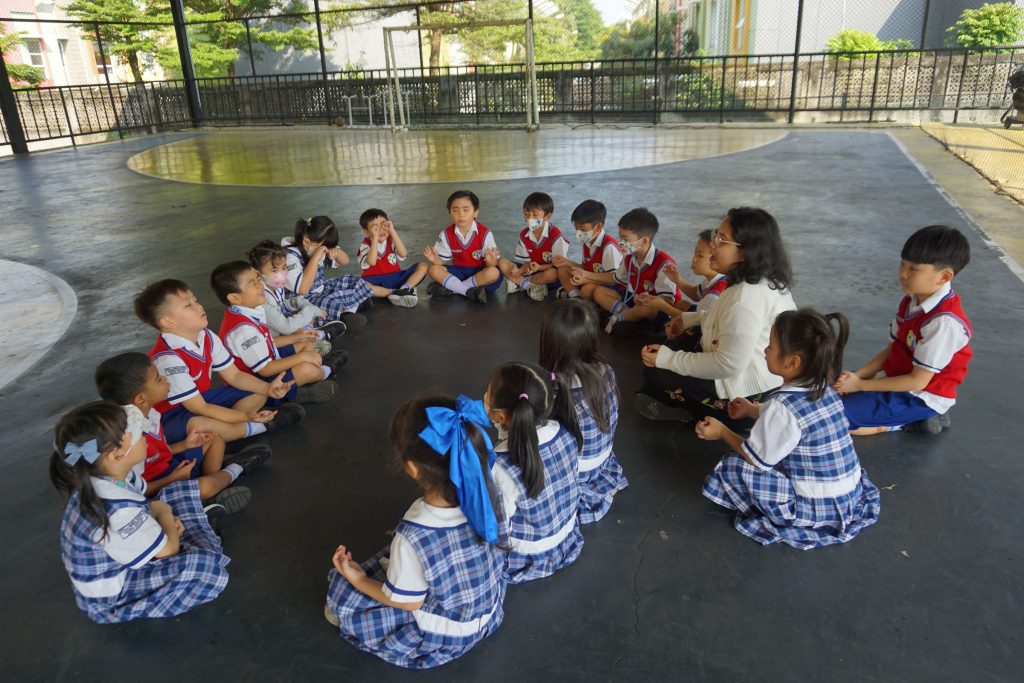
At the Primary level, the Wellbeing subject focuses on three main topics: Understanding Myself, My Relationship, and Navigating Our World. These three topics will be the core material taught throughout the 2025–2026 academic year.
1. Understanding Myself
In this topic, teachers and students learn together about identifying emotions, managing emotions, and building healthy habits.
- Identifying Emotions
Students are introduced to basic emotions such as happiness, anger, sadness, disgust, and fear. They learn to recognize physical responses that appear when experiencing certain emotions. For example, when feeling angry, the heart rate increases, and the jaw may tighten.
The goal is to help children develop awareness that emotions and physical states are interconnected, constantly sending messages to each other. Students also learn to reflect on the messages behind each emotion. For example:
- Anger teaches us to identify unmet needs.
- Happiness teaches us to appreciate and be grateful for the moment.
- Fear teaches us to prepare for what lies ahead.
- Managing Emotions
Once they recognize their emotions, students are guided to manage them by understanding the triggers behind those emotions. For example: “I feel angry because…” - Building Healthy Habits
Students are encouraged to develop healthy habits in areas such as eating, studying, self-care, and sleeping. They reflect on how the right habits can influence both emotions and behaviors.
In essence, this topic helps students gradually learn to recognize their emotions, understand the triggers, manage them effectively, and build habits that support their emotional well-being.
2. My Relationship
In this topic, students reflect on their relationships with themselves, friends, family, and their own habits. They also learn how to establish healthy boundaries and communicate likes and dislikes appropriately.
3. Navigating Our World
This topic teaches students how to identify their surroundings, distinguish safe environments, and understand which information is safe or unsafe to share with others.
More Than Just a Subject
The most important aspect of this subject is not just delivering the material, but also creating a safe “home” where students feel comfortable sharing their emotions.
Wellbeing aims to be a space where children can learn to know themselves, understand their emotions, discover what truly matters to them, build healthy habits, and choose safe environments.
Ultimately, the only friend who will always accompany us through every step of life is ourselves. That is why Wellbeing serves as a “patient friend” for students — helping them to get to know themselves, accept themselves, love themselves, and strive for the best version of who they can be.
A Fun and Engaging Approach
Although the material may seem complex for young learners, the Primary team delivers it in a light, engaging way through games and fun videos that are easy to understand.
Additionally, students are encouraged to keep a reflection journal. For instance, when the topic of anger is discussed, they can write about what makes them angry, how they feel when angry, and what they can do to feel better.
Conclusion
Becoming your best friend is one of the most important things in life. We hope Wellbeing will serve as a space where students can learn to understand themselves, manage their emotions, and gradually become their own best friend, leading to a healthier state of mental well-being.
Warm regards,
The Wellbeing Team


